CIVIL LAB EQUIPMENT in Chhatarpur
Get In Touch
Civil Lab Equipment in Chhatarpur – Manufacturer & Supplier
Civil Lab Equipment is used in civil engineering, construction and material testing laboratories to evaluate the physical, mechanical and performance properties of materials such as soil, concrete, cement, aggregates, bitumen and asphalt. A properly equipped laboratory helps engineers, contractors, quality-control teams and educational institutions perform standardized tests before and during construction projects.
The selection of Civil Lab Equipment in Chhatarpur depends on the materials being tested, required test methods, equipment capacity, accuracy, operating conditions and applicable standards. A civil laboratory may require basic apparatus such as sieves, moulds and balances as well as advanced testing machines including compression testing machines, CBR machines, direct shear apparatus, triaxial testing systems and bitumen testing equipment.
For laboratories serving construction and infrastructure projects, equipment should be selected according to the actual test procedure rather than simply choosing machines based on price or capacity. Relevant Indian and international testing standards should also be considered during procurement.
What Is Civil Lab Equipment?
Civil Lab Equipment refers to laboratory machines, instruments and apparatus used to test construction materials and determine their engineering properties. These systems support material characterization, quality control, research, product development and construction-site verification.
Depending on the laboratory's scope, the equipment range can include:
-
Soil Testing Equipment
-
Concrete Testing Equipment
-
Cement Testing Equipment
-
Aggregate Testing Equipment
-
Bitumen and Asphalt Testing Equipment
-
Geotechnical Testing Equipment
-
Material Testing Machines
-
Field Testing Equipment
-
Laboratory ovens and balances
-
Sample preparation equipment
A complete civil engineering laboratory is normally organized around the materials and tests that the laboratory is expected to handle.
Types of Civil Lab Equipment
Soil Testing Equipment
Soil testing equipment is used to determine properties such as compaction, shear strength, bearing capacity, permeability and classification.
Common equipment includes:
-
CBR Testing Machine
-
Proctor Compaction Apparatus
-
Direct Shear Apparatus
-
Triaxial Test Apparatus
-
Consolidation Test Apparatus
-
Liquid Limit Device
-
Plastic Limit Apparatus
-
Core Cutter Apparatus
-
Sand Replacement Apparatus
-
Permeability Apparatus
-
Unconfined Compression Test Apparatus
-
Soil Penetrometer
These tests are particularly important for foundation design, road construction, embankments, pavement subgrades and geotechnical investigations.
Concrete Testing Equipment
Concrete testing equipment helps laboratories evaluate fresh and hardened concrete properties.
Typical equipment includes:
-
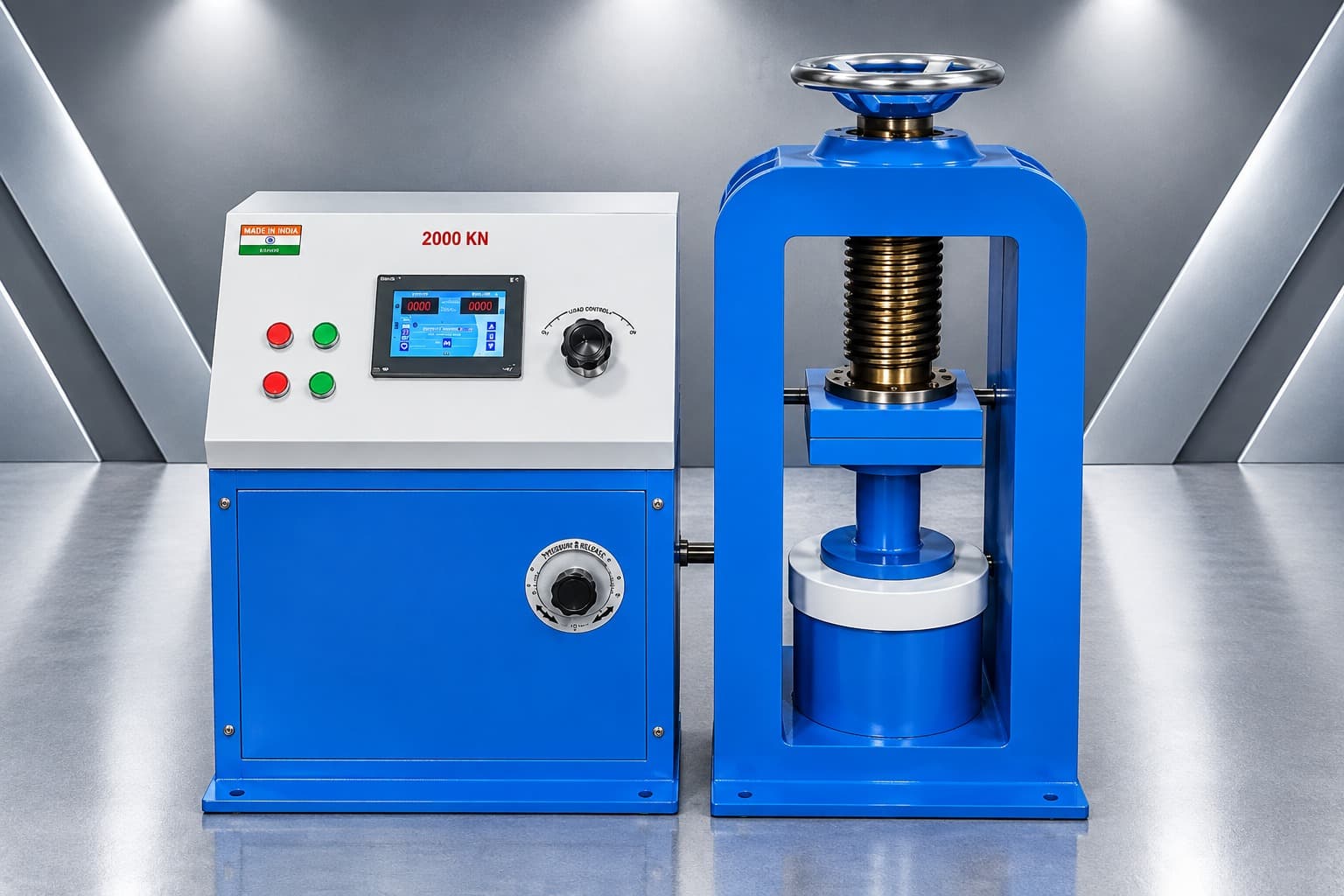
Compression Testing Machine
-
Cube Testing Machine
-
Concrete Cube Moulds
-
Cylinder Moulds
-
Slump Cone Apparatus
-
Compaction Factor Apparatus
-
Flexure Testing Machine
-
Concrete Permeability Apparatus
-
Rebound Hammer
-
Ultrasonic Pulse Velocity Tester
-
Concrete Vibrating Table
-
Curing Tank
Compression testing machines are commonly used to determine compressive strength of concrete specimens, while slump testing is used for assessing fresh-concrete workability.
Cement Testing Equipment
Cement testing requires specialized apparatus for evaluating properties such as consistency, setting time, soundness and fineness.
Common cement laboratory equipment includes:
-
Vicat Apparatus
-
Le Chatelier Apparatus
-
Blaine Air Permeability Apparatus
-
Cement Flow Table
-
Mortar Cube Moulds
-
Mortar Vibrating Machine
-
Cement Autoclave
-
Cement Sieves
-
Laboratory Balance
The appropriate apparatus should be selected according to the applicable test method and standard. For example, commonly referenced Indian cement testing standards include the IS 4031 series.
Aggregate Testing Equipment
Aggregate testing equipment is used to determine grading, strength, abrasion resistance, particle shape and related properties.
Important equipment includes:
-
Sieve Shaker
-
IS Test Sieves
-
Aggregate Crushing Value Apparatus
-
Aggregate Impact Value Apparatus
-
Los Angeles Abrasion Testing Machine
-
Flakiness Index Gauge
-
Elongation Index Gauge
-
Specific Gravity Apparatus
-
Water Absorption Equipment
-
Bulk Density Measures
-
Riffle Sample Divider
Aggregate testing is important because particle size distribution, shape and resistance to crushing or abrasion can affect the performance of concrete, pavement and other construction materials.
Bitumen and Asphalt Testing Equipment
Road and highway laboratories may require dedicated bitumen and asphalt testing systems.
These can include:
-
Bitumen Penetrometer
-
Ductility Testing Machine
-
Softening Point Apparatus
-
Flash and Fire Point Apparatus
-
Marshall Stability Testing Machine
-
Bitumen Extractor
-
Asphalt Mixer
-
Specific Gravity Apparatus
-
Asphalt Compactor
The exact equipment requirement depends on whether the laboratory performs routine quality control, pavement-material testing, mix design or research work.
Civil Lab Equipment Manufacturer in Chhatarpur
When selecting a Civil Lab Equipment Manufacturer in Chhatarpur, buyers should evaluate the equipment according to its intended test method, capacity, construction quality and measurement requirements.
Important technical considerations include:
-
Equipment capacity
-
Accuracy and resolution
-
Material and fabrication quality
-
Manual, semi-automatic or automatic operation
-
Digital data display where required
-
Sample dimensions and compatibility
-
Electrical requirements
-
Calibration and verification requirements
-
Availability of replacement components
-
Applicable IS, ASTM, BS or other standards
For load-testing equipment, capacity alone is not enough. The buyer should also consider the required accuracy, loading mechanism, specimen dimensions and verification requirements.
Civil Lab Equipment Supplier in Chhatarpur
A Civil Lab Equipment Supplier in Chhatarpur should be able to match the equipment specification with the laboratory's actual testing requirements.
Before placing an order, laboratories should provide details such as:
-
Test method or standard
-
Required equipment capacity
-
Sample size
-
Manual or automatic operation
-
Required accessories
-
Quantity
-
Electrical specifications
-
Installation requirements
-
Calibration or verification documentation
-
Delivery location
A specification-based quotation makes comparison easier than selecting equipment only from a generic product list.
Civil Lab Equipment Exporter in Chhatarpur
A Civil Lab Equipment Exporter in Chhatarpur may supply laboratory equipment for international construction, infrastructure, educational and testing projects.
Export enquiries generally require more detailed technical documentation. Buyers may need:
-
Product specifications
-
Equipment dimensions
-
Net and gross weight
-
Packing details
-
Electrical specifications
-
Country-specific power requirements
-
Test standards
-
Operation manuals
-
Calibration documentation where applicable
-
Commercial invoice and shipping documentation
International projects may specify ASTM, BS, EN or other standards in addition to Indian Standards. Therefore, the required testing standard should be confirmed before equipment is manufactured or supplied.
Civil Lab Equipment Distributor in Chhatarpur
A Civil Lab Equipment Distributor in Chhatarpur can support laboratories that require multiple categories of testing equipment from a single procurement channel.
For a complete laboratory setup, procurement may involve soil, concrete, cement, aggregate and bitumen testing systems together with general laboratory equipment.
A distributor or supplier should therefore be evaluated on:
-
Product range
-
Technical specification support
-
Availability of accessories
-
Spare-part support
-
Installation requirements
-
Documentation
-
Delivery capability
-
After-sales service
This is particularly relevant when establishing a new civil engineering laboratory or expanding an existing quality-control facility.
How to Select Civil Lab Equipment?
Choosing the right Civil Lab Equipment requires more than comparing prices. The equipment should be technically compatible with the laboratory's testing program.
1. Identify the Required Tests
Prepare a test-wise equipment list before procurement. For example, a soil laboratory may need CBR, compaction, direct shear, consolidation and permeability equipment.
2. Confirm the Applicable Standard
Specify the relevant IS, ASTM, BS, EN or project-specific testing standard before requesting quotations.
3. Check Capacity and Accuracy
Load capacity, measurement range, resolution and accuracy should correspond to the required test method.
4. Review Accessories
Many laboratory systems require moulds, proving rings, gauges, fixtures, loading accessories or sample-preparation equipment.
5. Consider Laboratory Workflow
Equipment placement, sample preparation, testing sequence and data recording should be considered when planning the laboratory.
6. Verify Documentation
Request appropriate technical specifications, manuals, test certificates and calibration or verification documents where applicable.
Applications of Civil Lab Equipment
Civil Lab Equipment in Chhatarpur can support testing and quality-control activities across multiple sectors, including:
-
Building construction
-
Highway construction
-
Road and pavement projects
-
Bridges and flyovers
-
Railway infrastructure
-
Airports
-
Dams and irrigation projects
-
Geotechnical investigations
-
Ready-mix concrete plants
-
Construction material laboratories
-
Engineering colleges and universities
-
Research and development laboratories
-
Government testing laboratories
-
Third-party material testing laboratories
The exact equipment configuration depends on the laboratory's testing scope and project requirements.
Quality, Standards and Testing Requirements
Quality control in a civil laboratory depends on both the testing procedure and the suitability of the equipment. Equipment should be selected according to the relevant standard and maintained in a condition that supports reliable measurements.
Indian laboratories may encounter standards from the BIS framework, while international projects may specify ASTM, BS, EN, AASHTO or project-specific requirements. For example, soil testing commonly references the IS 2720 series, while cement testing uses the IS 4031 series and concrete testing includes standards such as IS 516.
For critical measurement equipment, laboratories should also establish suitable calibration, verification and maintenance procedures based on their quality system and applicable testing requirements.
Why Choose Application-Specific Civil Lab Equipment?
Every laboratory has different testing requirements. A college laboratory may prioritize educational demonstration and routine practical testing, while a commercial material-testing laboratory may require higher-capacity machines, detailed documentation and repeatable measurement systems.
Similarly, a road laboratory may require greater emphasis on soil, aggregate, bitumen and asphalt testing, while a concrete laboratory may require compression, flexural, workability and durability testing equipment.
Therefore, Civil Lab Equipment should be selected according to:
-
Laboratory scope
-
Material type
-
Test method
-
Required capacity
-
Accuracy requirements
-
Applicable standard
-
Testing frequency
-
Automation requirements
-
Available laboratory space
-
Maintenance and service requirements
Get the Right Civil Lab Equipment for Your Testing Requirements
Whether you are establishing a new laboratory, expanding an existing facility or replacing individual testing instruments, the equipment should be specified according to the required test method and material application.
For Civil Lab Equipment in Chhatarpur, prepare your required test list, equipment capacity and applicable standards before requesting a quotation. This helps ensure that the selected equipment is technically suitable rather than simply matching a generic product description.
Contact the supplier with your laboratory requirements, required equipment categories, quantities and specifications to receive a project-specific quotation.
FAQs
What is included in Civil Lab Equipment?
Civil laboratory equipment can include soil, concrete, cement, aggregate, bitumen, asphalt and general material-testing equipment. The exact range depends on the laboratory's testing scope.
Which equipment is commonly used for soil testing?
Common soil testing equipment includes CBR machines, Proctor compaction apparatus, direct shear apparatus, triaxial equipment, consolidation apparatus, permeability equipment, liquid limit devices and field-density testing equipment.
Which machines are used for concrete testing?
Common concrete testing equipment includes compression testing machines, cube moulds, slump cone apparatus, compaction factor equipment, flexure testing machines, curing tanks and non-destructive testing instruments such as rebound hammers.
What standards should be considered when buying civil laboratory equipment?
The applicable standard depends on the test. Indian projects may require relevant BIS/IS standards, while international projects may specify ASTM, BS, EN, AASHTO or other standards.
How should a civil laboratory equipment list be prepared?
Start with the tests your laboratory needs to perform, identify the relevant standard for each test, then specify equipment capacity, accuracy, accessories, quantity and documentation requirements. This creates a test-based procurement list rather than a generic equipment list.
Can Civil Lab Equipment be supplied for complete laboratory setup?
Yes, a laboratory can be planned around multiple testing categories such as soil, concrete, cement, aggregates and bitumen. The final equipment list should be based on the laboratory's intended tests, project requirements and applicable standards.