CONSTANT AND FALLING HEAD PERMEABILITY in Chhatarpur
Get In Touch
Constant and Falling Head Permeability Manufacturer in Chhatarpur
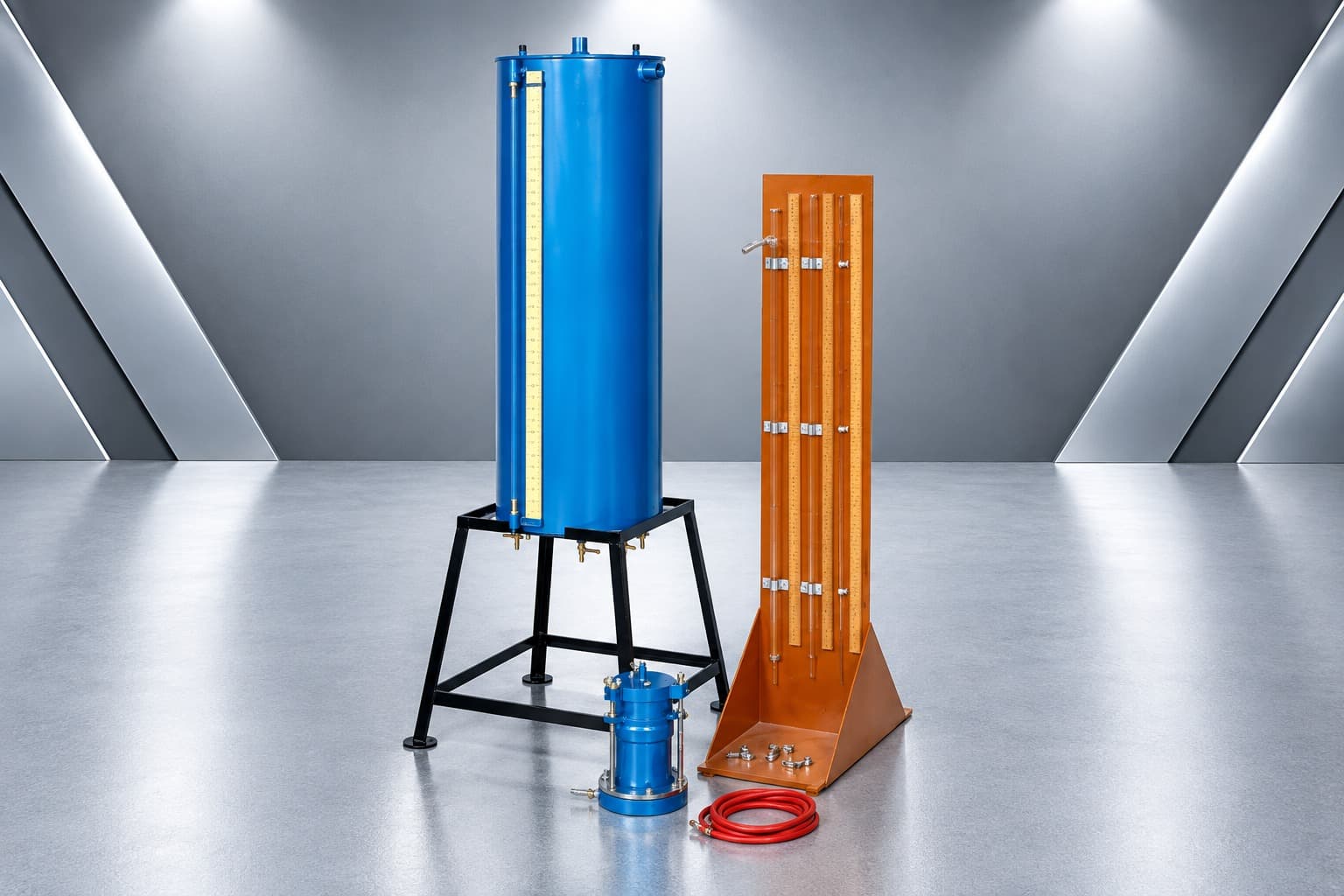
Constant and Falling Head Permeability equipment is used in geotechnical laboratories to determine the coefficient of permeability, also known as hydraulic conductivity, of soil. This parameter indicates how easily water flows through interconnected voids within a soil mass under a hydraulic gradient. The equipment is important for soil investigation, foundation engineering, embankment design, drainage studies and groundwater-related assessments. Civil Testing Equipment provides a contact point for laboratories and civil engineering professionals looking for Constant and Falling Head Permeability in Chhatarpur for educational, research and geotechnical testing applications.
The apparatus supports two methods of permeability testing: the constant head method and the falling head method. The constant head method is generally suitable for relatively permeable granular soils, such as sands and gravels, while the falling head method is commonly used for less permeable soils, including silts and fine-grained materials where appropriate. The selection depends on the soil characteristics, expected flow rate and applicable test procedure.
Constant and Falling Head Permeability Manufacturer in Chhatarpur
A Constant and Falling Head Permeability Manufacturer in Chhatarpur should provide an apparatus designed to maintain or measure the hydraulic conditions required for permeability testing. The equipment typically includes a permeameter cell, water supply arrangement, inlet and outlet connections, water-level measuring tubes and supporting components. The exact configuration depends on the selected model.
In the constant head method, a constant difference in hydraulic head is maintained across a prepared soil specimen. The quantity of water passing through the specimen is measured over a known time interval. This allows the coefficient of permeability to be calculated using the specimen dimensions, collected water volume, elapsed time and hydraulic head difference.
In the falling head method, water flows through the soil specimen while the water level in a standpipe decreases. The change in water head is recorded over a measured time interval. The permeability coefficient is then calculated using the specimen dimensions, standpipe dimensions and recorded head values.
Equipment assembly and inspection should address the integrity of the permeameter cell, connections, seals, standpipes and water supply arrangement. The apparatus must be appropriate for the intended testing procedure and specimen dimensions.
Constant and Falling Head Permeability Supplier in Chhatarpur
Selecting a Constant and Falling Head Permeability Supplier in Chhatarpur involves checking the apparatus configuration, specimen size, measurement arrangement and included accessories. Laboratories should confirm whether the equipment supports both constant head and falling head tests in the required configuration.
Typical components may include:
-
Permeameter cell for holding the soil specimen.
-
Water reservoir or water supply arrangement.
-
Standpipe or graduated tube for measuring head changes.
-
Inlet and outlet connections for controlled water flow.
-
Porous plates or filter components, where specified.
-
Tubing, seals and fittings required for the selected arrangement.
-
Accessories for measuring water volume and elapsed time.
Before ordering, buyers should confirm the complete accessory list, operating instructions and technical documentation. A Constant and Falling Head Permeability Supplier in Chhatarpur should be provided with the laboratory's testing requirements to help identify a suitable configuration.
Constant and Falling Head Permeability Distributor in Chhatarpur
A Constant and Falling Head Permeability Distributor in Chhatarpur can help laboratories evaluate equipment configurations according to testing requirements and procurement budgets. Educational institutions, soil testing laboratories, engineering consultants and infrastructure contractors should specify the required method, specimen dimensions, expected permeability range and quantity.
For institutional or project procurement, confirm equipment availability, delivery arrangements, included accessories and any required inspection or calibration documentation before placing the order. The quoted scope should clearly distinguish standard components from optional accessories.
Constant and Falling Head Permeability Exporter in Chhatarpur
A Constant and Falling Head Permeability Exporter in Chhatarpur should coordinate the agreed equipment configuration, protective packaging and shipping documentation according to the destination and purchase terms. International buyers should confirm the supplied components, packaging requirements, operating instructions and any applicable import documentation before dispatch.
For export enquiries, provide the destination country, required quantity, intended test method and any special packaging or documentation requirements. Export destinations and certifications should be confirmed for the specific order rather than assumed.
Constant and Falling Head Permeability Specifications
The specifications of Constant and Falling Head Permeability in Chhatarpur equipment depend on the selected model and testing requirements.
| Parameter | Description |
|---|---|
| Equipment type | Constant head and falling head permeability apparatus |
| Test purpose | Determination of soil permeability or hydraulic conductivity |
| Testing methods | Constant head and falling head |
| Specimen material | Soil prepared according to the applicable procedure |
| Specimen dimensions | As per the selected permeameter cell |
| Water supply | Reservoir or suitable controlled water supply |
| Head measurement | Standpipe, graduated tube or specified measuring arrangement |
| Flow measurement | Volumetric collection or suitable measurement method |
| Accessories | Based on the selected model |
| Applicable standard | IS 2720 (Part 17), where applicable |
| Installation requirements | Depend on the selected configuration |
| Documentation | Confirm according to procurement requirements |
Working Principle and Testing Procedure
The permeability test evaluates the flow of water through a saturated or appropriately prepared soil specimen under a hydraulic gradient. Proper specimen preparation, control of water flow and accurate measurement are essential for reliable results.
Constant head method: The specimen is prepared inside the permeameter cell, and a constant hydraulic head difference is maintained across it. After the flow becomes steady, the volume of water collected over a known time is measured. The coefficient of permeability is calculated using the specimen's cross-sectional area and length, the collected water volume, elapsed time and hydraulic head difference.
Falling head method: A standpipe containing water is connected to the specimen. The initial and final water heads are recorded over a measured time interval as water flows through the soil. The coefficient of permeability is calculated using the specimen dimensions, standpipe cross-sectional area, elapsed time and the logarithmic ratio of the initial and final heads.
For both methods, trapped air, leakage, incomplete saturation and unsuitable flow conditions can affect results. The test procedure should follow the applicable standard and account for the soil type and laboratory conditions.
Features of Permeability Testing Equipment
Depending on the selected configuration, the apparatus may offer:
-
Support for constant head permeability testing.
-
Support for falling head permeability testing.
-
A permeameter cell for containing prepared soil specimens.
-
A water-level measurement arrangement.
-
Inlet and outlet connections for water movement.
-
Standpipes or graduated tubes for head observation.
-
Components designed for controlled laboratory testing.
-
Compatibility with relevant soil permeability procedures.
-
Accessories selected for the intended specimen dimensions.
-
A configuration suitable for teaching, research or routine geotechnical testing.
Applications and Industries Served
Constant and Falling Head Permeability in Chhatarpur is relevant to soil testing laboratories, civil engineering colleges, geotechnical consultants, infrastructure contractors and research institutions.
Typical applications include assessing drainage characteristics of soils, investigating groundwater movement, evaluating granular materials for engineering works, studying seepage through embankment soils and supporting foundation investigations. Permeability data also contributes to the assessment of filtration and drainage layers in suitable civil engineering applications.
The results should be interpreted alongside soil classification, compaction characteristics, site investigation findings and other relevant geotechnical data.
Standards, Quality Checks and Equipment Selection
IS 2720 (Part 17) is a relevant Indian standard for laboratory determination of permeability of soil. The applicable method and current standard requirements should be verified before testing.
Before purchasing from a Constant and Falling Head Permeability Manufacturer in Chhatarpur, confirm the permeameter cell dimensions, standpipe arrangement, water connections, included accessories and suitability for the intended soil types.
A Constant and Falling Head Permeability Supplier in Chhatarpur should receive the required specimen dimensions, testing method, expected permeability range, quantity and delivery location to help identify an appropriate apparatus configuration. Buyers should also confirm the availability of operating instructions and any required inspection documentation.
Why Choose Civil Testing Equipment?
Civil Testing Equipment provides a point of contact for enquiries about civil engineering and soil testing laboratory equipment. Buyers can share their intended test method and technical requirements to clarify the appropriate equipment configuration, accessories and documentation before ordering. Product specifications, availability, delivery commitments and any manufacturer-specific capabilities should be confirmed in the quotation.
Get a Quote for Constant and Falling Head Permeability
For a quotation, provide the required apparatus configuration, specimen dimensions, testing method, quantity, applicable standard and delivery location.
Phone: +91-8826549585
Email: civiltestingequipment@gmail.com
Frequently Asked Questions
1. What is Constant and Falling Head Permeability equipment used for?
It is used to determine the coefficient of permeability or hydraulic conductivity of soil by measuring water flow under a known hydraulic gradient.
2. What is the difference between constant head and falling head tests?
The constant head method maintains a fixed hydraulic head difference and measures water flow over time. The falling head method measures the decrease in water head over a known time interval.
3. Which soils are suitable for the constant head method?
The method is generally suitable for relatively permeable granular soils, such as sands and gravels, when the selected procedure and specimen conditions are appropriate.
4. Which standard applies to soil permeability testing?
IS 2720 (Part 17) is a relevant Indian standard for laboratory permeability testing of soil. The applicable procedure should be verified before use.
5. What should I check before purchasing the apparatus?
Confirm specimen dimensions, the required testing methods, standpipe arrangement, water connections, included accessories and the applicable test standard.
6. Can the apparatus be used in educational laboratories?
Yes. It can support soil mechanics practicals, geotechnical engineering demonstrations and laboratory research when the selected configuration meets the institution's requirements.