THERMAL IMAGING CAMERA in Gurugram
Get In Touch
Thermal Imaging Camera Manufacturer & Supplier in Gurugram
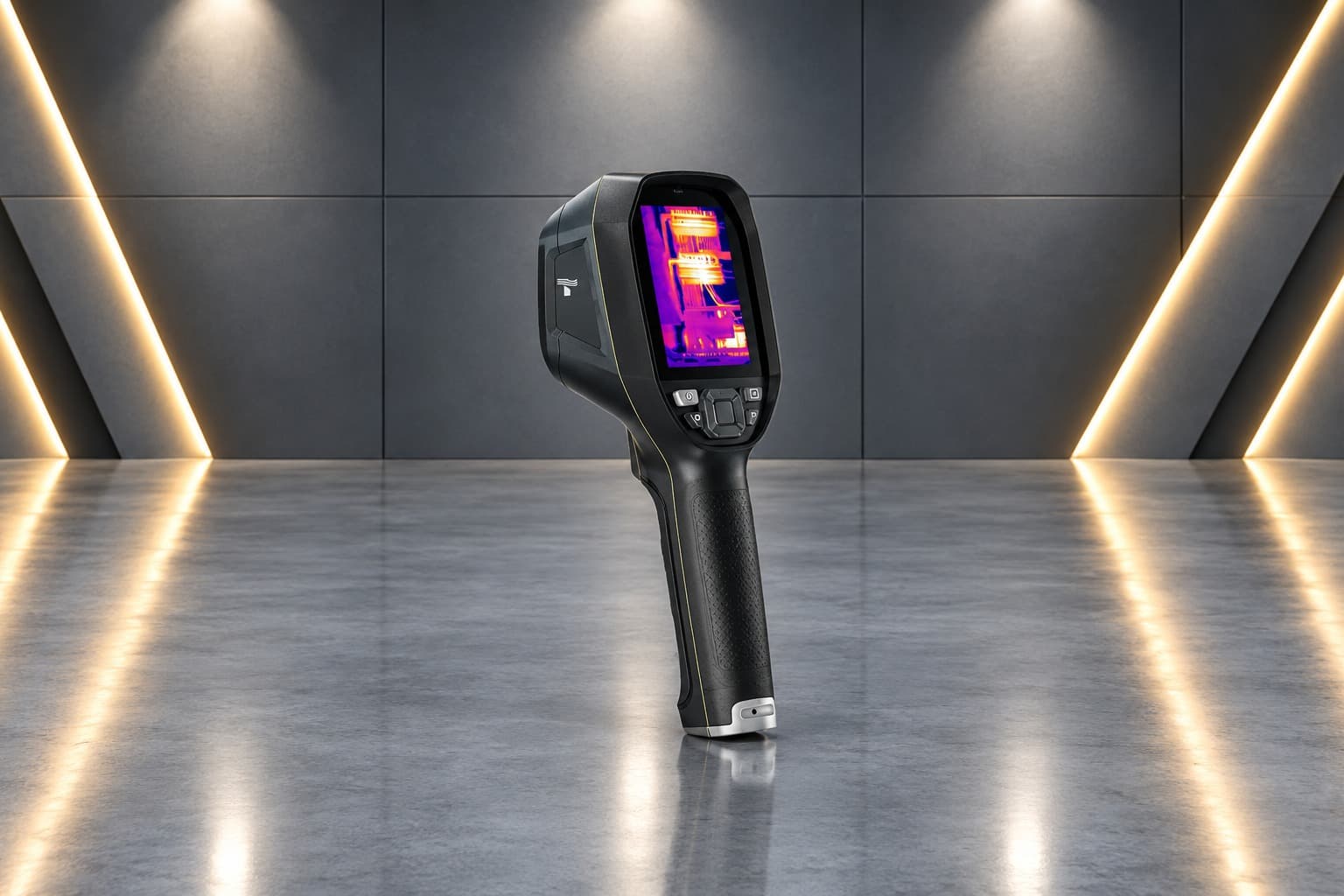
A Thermal Imaging Camera in Gurugram is a non-contact inspection instrument that detects infrared radiation emitted by an object and converts it into a thermal image. Unlike conventional cameras that capture visible light, a thermal camera displays temperature variations across equipment, surfaces and components. It is useful for identifying abnormal heat patterns without physically touching the inspection target.
Civil Testing Equipment supplies thermal imaging equipment for industrial inspection, temperature monitoring, maintenance and diagnostic applications. Depending on the selected model, a thermal camera may include an infrared detector, optical lens, display, temperature measurement functions and image-analysis software. Buyers can select equipment according to measurement range, detector resolution, thermal sensitivity and intended operating conditions.
For engineering teams, a Thermal Imaging Camera in Gurugram can support preventive maintenance and help identify potential problems before they result in equipment failure. Model selection should be based on the required measurement accuracy, target distance, surface characteristics and application-specific requirements.
Thermal Imaging Camera Manufacturer in Gurugram
As a Thermal Imaging Camera Manufacturer in Gurugram search option for industrial buyers, Civil Testing Equipment provides a point of contact for discussing equipment requirements and suitable configurations. Actual manufacturing capability and model-specific availability should be confirmed before procurement.
Working Principle and Technical Construction
A thermal imaging camera operates by collecting infrared radiation through an infrared-compatible optical lens. The detector converts incoming radiation into electrical signals, which are processed to create a thermal image. Radiometric models can also calculate surface temperature using calibration data and measurement corrections.
Important components include:
-
Infrared detector: Commonly an uncooled microbolometer in portable industrial models.
-
Infrared lens: Determines the field of view and the ability to inspect small targets at a distance.
-
Image processing system: Converts detector signals into a usable thermal image.
-
Temperature analysis: Displays spot temperatures, minimum and maximum values, or temperature profiles when supported.
-
Display and data storage: Allows users to review images and document inspection findings.
Temperature readings depend on emissivity, reflected radiation, distance and environmental conditions. Shiny metal surfaces, in particular, can produce misleading readings unless measurement settings and surface characteristics are considered.
Thermal Imaging Camera Supplier in Gurugram
As a Thermal Imaging Camera Supplier in Gurugram option, Civil Testing Equipment can assist buyers in identifying equipment requirements for laboratories, industrial facilities, engineering projects and maintenance operations.
Before requesting a quotation, buyers should clarify whether they need a handheld camera for routine inspection, a higher-resolution system for detailed diagnostics or a fixed camera for continuous process monitoring. Availability of specific models, accessories and software should be confirmed against the required configuration.
Procurement support can include discussing application requirements, comparing available technical parameters, reviewing accessories and confirming the quantity required. For bulk orders and project procurement, buyers should provide the intended application and technical specifications to help identify a suitable model.
Thermal Imaging Camera Specifications
The specifications below describe parameters buyers should evaluate. Exact values depend on the selected model and should be verified against its datasheet.
| Parameter | Technical consideration |
|---|---|
| Detector type | Uncooled microbolometer or another model-specific detector |
| Infrared resolution | Determines the number of thermal measurement pixels |
| Thermal sensitivity (NETD) | Indicates the ability to distinguish small temperature differences |
| Temperature range | Must cover the expected operating and inspection temperatures |
| Measurement accuracy | Model-specific tolerance, often expressed in °C or percentage |
| Spectral range | Depends on detector and optical configuration |
| Field of view (FOV) | Determines the area visible through the lens |
| Spatial resolution (IFOV) | Helps establish whether a target can be measured at a given distance |
| Focus system | Fixed, manual or automatic, depending on the model |
| Image modes | Infrared, visible-light fusion or picture-in-picture where supported |
| Connectivity | USB, wireless or other interfaces according to configuration |
| Reporting | Image storage, analysis and report-generation capabilities where available |
Detector resolution and thermal sensitivity are not interchangeable. Higher resolution helps distinguish smaller targets, while lower NETD generally improves the visibility of subtle temperature differences. Neither parameter alone guarantees accurate temperature measurement.
Key Features of Thermal Imaging Cameras
A Thermal Imaging Camera in Gurugram should be selected according to the inspection task rather than appearance or resolution alone. Depending on the model, relevant features include:
-
Non-contact measurement: Inspects accessible surfaces without direct physical contact.
-
Thermal image mapping: Shows temperature distribution across the field of view.
-
Hotspot identification: Helps locate abnormal heating in electrical and mechanical systems.
-
Adjustable emissivity: Improves measurement calculations for different surface materials.
-
Multiple measurement points: Supports spot, area or temperature-profile analysis where available.
-
Selectable colour palettes: Helps users interpret thermal patterns visually.
-
Image documentation: Stores inspection results for maintenance records.
-
Portable operation: Handheld designs support inspections across multiple locations.
-
Focus and lens options: Help match image detail to target size and distance.
-
Analysis software: May support temperature analysis and report preparation, depending on the package.
Applications and Industries
Thermal imaging cameras are used to investigate temperature patterns in equipment and structures. Common applications include:
-
Electrical maintenance: Identifying unusual heating in connections, distribution panels and electrical components.
-
Mechanical inspection: Monitoring bearings, motors, gearboxes and rotating machinery for abnormal thermal patterns.
-
Building diagnostics: Investigating insulation irregularities, heat loss and possible moisture-related patterns.
-
Industrial process monitoring: Observing temperature variations in manufacturing equipment and process systems.
-
Research and laboratories: Recording thermal behaviour during experiments and material testing.
-
Civil engineering: Assessing surface temperature patterns in building materials and structures where thermography is appropriate.
The camera indicates thermal conditions; further inspection may be necessary to establish the underlying cause of an anomaly.
Thermal Imaging Camera Distributor in Gurugram
A Thermal Imaging Camera Distributor in Gurugram should help buyers evaluate compatibility between the instrument and the intended application. Civil Testing Equipment can be contacted to discuss product requirements, model options and procurement needs.
When comparing equipment, consider the target's size, distance, temperature range, surface emissivity, ambient conditions and required documentation. A camera intended for broad-area building inspections may not provide the spatial detail needed for small electrical connections. Likewise, high-temperature industrial processes may require a different measurement range and optical configuration.
Thermal Imaging Camera Exporter in Gurugram
For buyers exploring a Thermal Imaging Camera Exporter in Gurugram, international procurement requirements should be confirmed before placing an order. Product availability, packaging, shipping arrangements and export documentation depend on the selected equipment and destination.
Where applicable, buyers should confirm the commercial invoice, packing list, product datasheet, warranty terms and any destination-specific regulatory documents required for import clearance. Export destinations and shipping capabilities should be verified directly with the supplier.
How to Select the Right Thermal Imaging Camera
Choose a model by evaluating these practical factors:
-
Required temperature measurement range and accuracy.
-
Detector resolution and target size at the working distance.
-
NETD for detecting subtle temperature differences.
-
Lens field of view, focus and spatial resolution.
-
Emissivity adjustment and reflected-temperature compensation.
-
Image storage, connectivity and reporting requirements.
-
Operating environment, portability and available accessories.
These checks help prevent purchasing a camera that produces images but cannot measure the target adequately.
Quality Checks and Documentation
Before procurement, review the manufacturer's datasheet, stated measurement accuracy, calibration information where applicable, operating limits and included accessories. Confirm whether the instrument supports radiometric image files and whether its software can export the reports required by your team. Any calibration certificate, inspection record or warranty document should be confirmed for the specific model rather than assumed to be included.
Get a Quote for Thermal Imaging Camera
Contact Civil Testing Equipment to discuss your application and request a suitable product quotation. Share the intended use, required temperature range, detector resolution, preferred features, quantity and delivery location. If you have a technical specification or a preferred model, provide those details for a more relevant quotation.
Phone: +91-8826549585
Email: civiltestingequipment@gmail.com
Frequently Asked Questions
1. What is a thermal imaging camera used for?
It detects infrared radiation and displays temperature patterns for electrical inspection, mechanical maintenance, building diagnostics and industrial monitoring.
2. Does a thermal camera measure temperature without contact?
Yes. A radiometric thermal camera estimates surface temperature from infrared radiation without requiring physical contact, subject to measurement conditions and instrument specifications.
3. What is NETD in a thermal camera?
NETD, or Noise Equivalent Temperature Difference, indicates how small a temperature difference the detector can distinguish. A lower value generally means better thermal sensitivity.
4. Does higher infrared resolution always mean better accuracy?
No. Resolution affects image detail, while measurement accuracy depends on calibration, emissivity, reflected radiation, focus and other factors.
5. How can I choose a suitable thermal imaging camera?
Compare temperature range, accuracy, resolution, NETD, lens characteristics, operating conditions and reporting features against your inspection requirements.