LABORTARY MORTAR MIXER in Kotdwar
Get In Touch
Laboratory Mortar Mixer Manufacturer & Supplier in Kotdwar
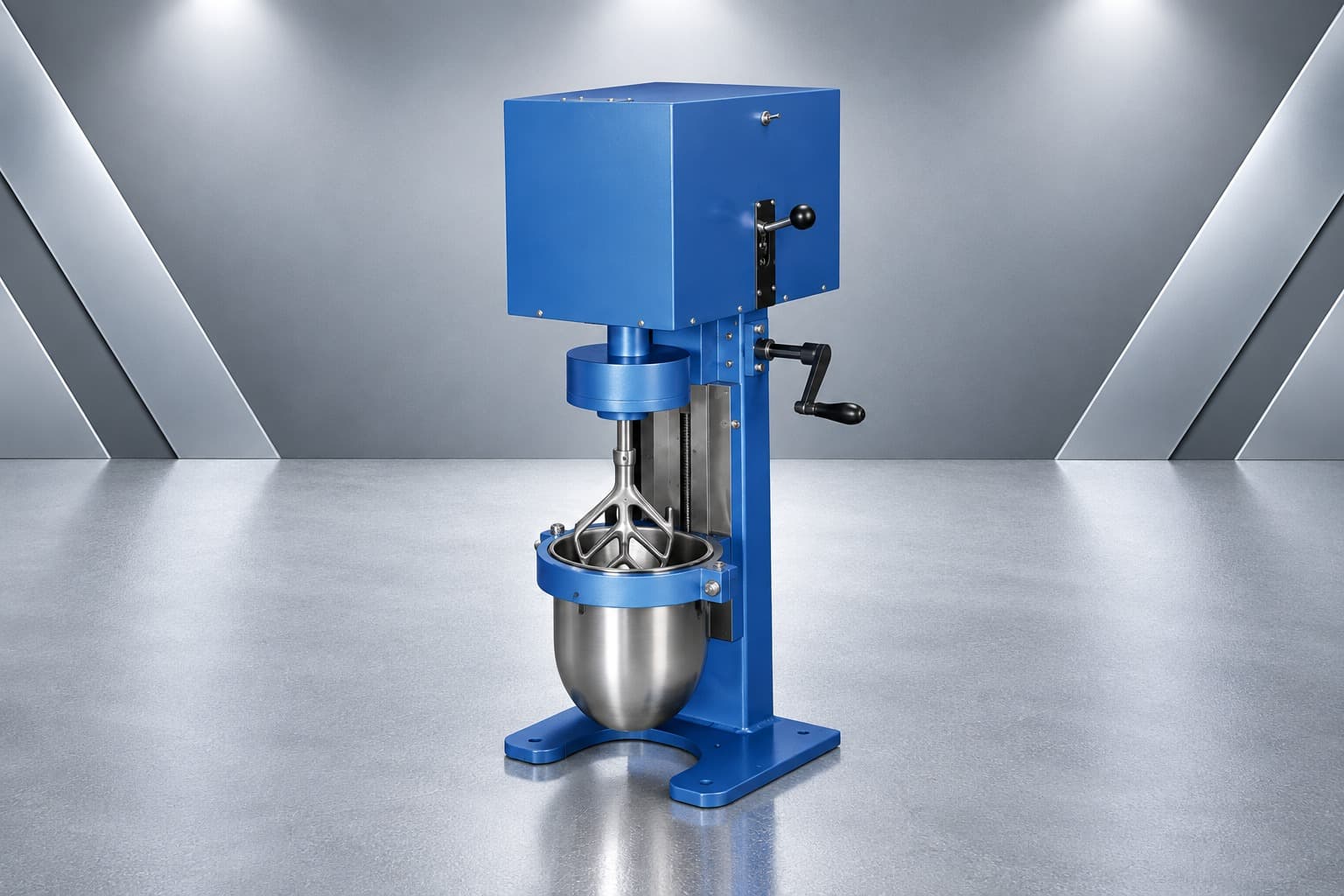
Laboratory Mortar Mixer in Kotdwar is a laboratory mixing machine designed for the controlled mechanical mixing of hydraulic cement pastes and mortars used in standardized testing. It is primarily used in cement-testing laboratories, construction-material laboratories, research facilities and quality-control departments where consistent mixing conditions are required before further testing.
A laboratory mortar mixer generally uses a planetary or epicyclic mixing action, allowing the paddle to rotate around its own axis while simultaneously moving around the mixing bowl. This arrangement helps distribute cement, water and sand throughout the batch. ASTM C305 covers mechanical mixing of hydraulic cement pastes and mortars of plastic consistency.
A Laboratory Mortar Mixer in Kotdwar can be configured with a stainless-steel bowl, mixing paddle, controlled-speed motor, bowl-lifting mechanism and manual or programmable controls. Standard laboratory configurations commonly use a 5 L bowl and two controlled mixing speeds of approximately 140 ± 5 rpm and 285 ± 10 rpm.
For buyers looking for a Laboratory Mortar Mixer Manufacturer in Kotdwar, the important considerations include mixing mechanism, bowl capacity, paddle design, speed accuracy, construction quality, electrical configuration, safety provisions and conformity with the required testing standard.
Laboratory Mortar Mixer Manufacturer in Kotdwar
A Laboratory Mortar Mixer Manufacturer in Kotdwar should design the equipment around the requirements of the applicable cement and mortar testing procedure. ASTM C305 specifies an electrically driven mixer of epicyclic type with both planetary and revolving paddle motion and at least two controlled speeds.
The manufacturing process generally includes fabrication of the main frame, preparation of the mixing bowl and paddle, installation of the drive mechanism, fitting of speed-control components and assembly of the bowl-lifting system. Stainless steel is commonly used for the mixing bowl and paddle in laboratory models because it provides a durable, cleanable contact surface.
The mixer should be assembled so that the paddle maintains appropriate clearance from the bowl and operates smoothly throughout the mixing cycle. ASTM C305 specifies controlled slow and fast speeds of 140 ± 5 r/min and 285 ± 10 r/min respectively, with corresponding planetary movement.
Depending on the model, manual controls or programmable mixing cycles can be provided. Automatic configurations may additionally include programmed mixing sequences and controlled sand or water feeding.
Laboratory Mortar Mixer Supplier in Kotdwar
A Laboratory Mortar Mixer Supplier in Kotdwar can provide equipment for cement plants, construction laboratories, R&D facilities, civil engineering institutions, testing agencies and industrial quality-control departments.
Supply configurations may include:
- 5 L laboratory mortar mixer
- Stainless-steel mixing bowl
- Stainless-steel or standard laboratory paddle
- Two-speed controlled operation
- Manual-control configuration
- Automatic programmable configuration
- Bowl-lifting mechanism
- Safety cover or interlock, where specified
- Sand-feeding accessories for applicable models
- Replacement bowl and paddle assemblies
A Laboratory Mortar Mixer Supplier in Kotdwar should confirm the required standard, bowl capacity, operating speeds, electrical supply and automation level before preparing the quotation.
Laboratory Mortar Mixer Exporter in Kotdwar
A Laboratory Mortar Mixer Exporter in Kotdwar can supply laboratory mixing equipment for international cement and construction-material testing requirements. Export orders can be prepared according to the buyer's specified standard, electrical configuration, accessories and packaging requirements.
Depending on the purchase order, export supply may include product specifications, packing documentation, commercial documents and inspection records. International buyers should provide destination-country electrical requirements and applicable testing standards before dispatch.
Laboratory Mortar Mixer Specifications
Exact specifications depend on the selected model and applicable testing procedure.
| Parameter | Specification / Requirement |
|---|---|
| Product | Laboratory Mortar Mixer |
| Main Application | Mechanical mixing of cement pastes and mortars |
| Mixing Mechanism | Planetary / epicyclic action |
| Typical Bowl Capacity | 5 L |
| Bowl Material | Stainless steel, depending on model |
| Mixing Speeds | 140 ± 5 rpm and 285 ± 10 rpm |
| Planetary Speed | Approximately 62 rpm and 125 rpm respectively |
| Operation | Manual or programmable, depending on model |
| Mixing Paddle | Laboratory-standard paddle |
| Motor | Electrically driven |
| Power Supply | Model-dependent; commonly 110/220–230 V, 50/60 Hz |
| Safety Features | Cover/interlock/emergency stop where configured |
| Standards | ASTM C305, EN 196 and other applicable methods |
| Customization | Subject to technical requirements |
Commercial laboratory models confirm 5 L bowls, stainless-steel mixing components and two controlled speeds around 140 and 285 rpm.
Features of Laboratory Mortar Mixer
A properly configured Laboratory Mortar Mixer in Kotdwar can provide:
- Planetary mixing action for uniform material distribution
- Controlled slow and fast mixing speeds
- Stainless-steel mixing bowl
- Laboratory-standard mixing paddle
- Stable mechanical frame
- Bowl lifting and lowering mechanism
- Manual or automatic operation
- Repeatable mixing cycles
- Easy cleaning after testing
- Compatibility with cement and mortar laboratory procedures
- Safety provisions on suitable configurations
- Programmable operation on automatic models
The controlled speeds are particularly important for standardized testing because the mixing procedure can influence the consistency and uniformity of the prepared specimen material.
Applications of Laboratory Mortar Mixer
The primary application is the controlled preparation of hydraulic cement pastes and mortars before laboratory testing. ASTM C305 states that its practice is intended for mechanical mixing of pastes and mortars used for testing hydraulic cements.
A Laboratory Mortar Mixer in Kotdwar can be used for:
- Cement testing laboratories
- Mortar testing laboratories
- Construction-material laboratories
- Cement manufacturing plants
- R&D laboratories
- Civil engineering colleges
- Quality-control laboratories
- Concrete-material research facilities
- Infrastructure project laboratories
- Building-material testing facilities
The prepared mortar may subsequently be used for relevant consistency, strength or other material-testing procedures according to the applicable standard.
Industries We Serve
The equipment is relevant to cement manufacturers, construction companies, EPC contractors, infrastructure organizations, testing laboratories, engineering consultants, research institutions, educational laboratories and quality-control departments.
For procurement teams, the mixer should be selected according to the required test procedure, batch capacity, speed requirements and laboratory workload.
Standards & Specifications
ASTM C305 – Standard Practice for Mechanical Mixing of Hydraulic Cement Pastes and Mortars of Plastic Consistency is a key reference for this type of equipment. The standard specifies an electrically driven epicyclic mixer with planetary and revolving paddle motion and controlled mixing speeds.
Laboratory mortar mixers are also commercially configured for standards such as EN 196, AASHTO T162, DIN 1164, BS 3892 and ISO 679, depending on the model and intended application.
The buyer should confirm the exact applicable standard and current edition before finalizing equipment specifications.
Quality Standards & Testing of Laboratory Mortar Mixer
Quality inspection can include:
- Dimensional inspection
- Bowl-capacity verification
- Paddle inspection
- Speed verification
- Motor and drive inspection
- Mixing-action testing
- Paddle-to-bowl clearance verification
- Electrical safety inspection
- Functional testing
- Control-panel testing
- Safety-cover/interlock testing where provided
- Final operational inspection
For standardized laboratory applications, speed accuracy and mechanical movement should be checked against the applicable test procedure.
How to Select the Right Laboratory Mortar Mixer
Before purchasing, consider:
- Applicable standard – Identify ASTM C305, EN 196 or another required procedure.
- Bowl capacity – Confirm the required batch size; 5 L is a common laboratory configuration.
- Mixing speeds – Verify that the machine provides the speeds required by the testing procedure.
- Mixing mechanism – Planetary/epicyclic action is important for standardized cement and mortar mixing.
- Bowl and paddle material – Stainless-steel components are commonly used for laboratory applications.
- Automation – Choose manual or programmable operation according to testing workload.
- Electrical supply – Confirm voltage, frequency and phase requirements.
- Safety – Check for appropriate guards, interlocks and emergency-stop arrangements.
- Accessories – Confirm whether bowl, paddle, sand feeder and other accessories are included.
Why Choose a Laboratory Mortar Mixer Manufacturer in Kotdwar?
When evaluating a Laboratory Mortar Mixer Manufacturer in Kotdwar, buyers should examine manufacturing quality, speed control, mixing mechanism, component materials and conformity with the specified testing procedure.
For laboratory installations and bulk procurement, the manufacturer should clearly define bowl capacity, mixing speeds, electrical requirements, accessories and available inspection documentation. Technical specifications should be finalized before commercial confirmation.
Laboratory Mortar Mixer Supply for Industrial Projects
A Laboratory Mortar Mixer Supplier in Kotdwar can support new laboratory installations, replacement equipment, R&D projects, educational laboratories and expansion of existing cement-testing facilities.
For larger laboratory projects, the equipment can be specified together with additional cement-testing instruments, spare mixing bowls, paddles and other accessories according to the laboratory's testing scope.
For overseas requirements, a Laboratory Mortar Mixer Exporter in Kotdwar can coordinate packaging, product documentation and shipment requirements according to the purchase order.
Get a Quote for Laboratory Mortar Mixer
To receive an accurate quotation, buyers should provide:
- Product name
- Applicable testing standard
- Required bowl capacity
- Required mixing speeds
- Manual or automatic operation
- Electrical supply
- Quantity
- Accessories required
- Inspection/documentation requirements
- Delivery location
A Laboratory Mortar Mixer Distributor in Kotdwar can use these details to prepare a technically suitable commercial quotation. For project procurement, sharing the laboratory specification or test standard helps ensure that the selected configuration matches the intended application.