RELATIVE DENSITY APPARATUS in Nagpur
Get In Touch
Relative Density Apparatus Manufacturer & Supplier in Nagpur
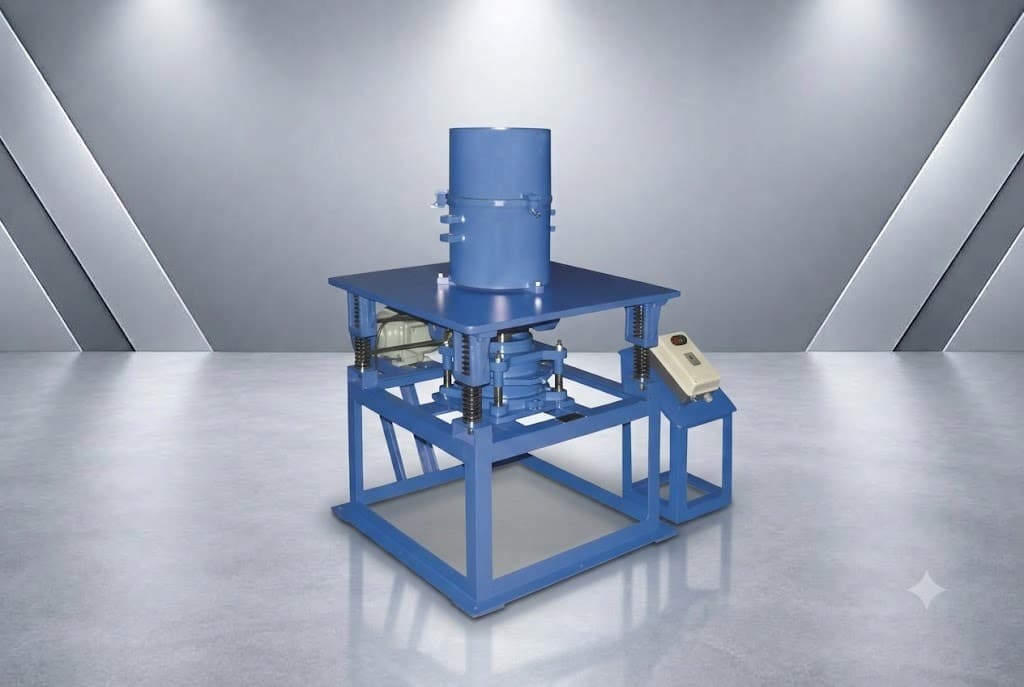
A Relative Density Apparatus is a soil-testing instrument used to determine the maximum and minimum index densities of cohesionless soils, such as sand and gravel. These measurements help geotechnical engineers evaluate the compactness of granular soil and calculate its relative density or density index. The results are useful in foundation investigations, earthwork quality assessment and geotechnical engineering studies.
For laboratories and construction projects sourcing a Relative Density Apparatus in Nagpur, equipment selection should be based on the applicable testing method, mould capacity, accessories and project specifications. The apparatus is commonly used with a vibratory table or another prescribed test arrangement, depending on the method selected. It supports laboratory determination of the density limits needed to assess granular soil conditions.
The equipment is relevant to civil engineering laboratories, geotechnical consultants, construction contractors, educational institutions and infrastructure developers. Buyers should confirm the required configuration and compliance documentation before ordering to ensure that the equipment meets their testing requirements.
Relative Density Apparatus Manufacturer in Nagpur
A Relative Density Apparatus is designed around the mould assembly and accessories required to establish the minimum and maximum index densities of cohesionless soil. Depending on the specified configuration, the assembly may include a cylindrical mould, guide sleeve, surcharge base plate, surcharge weights and related measuring accessories.
The manufacturing and assembly process should focus on dimensional conformity, component compatibility and reliable test operation. Important considerations include:
-
Mould fabrication: The mould must conform to the dimensions and capacity specified for the selected test method.
-
Component machining: Contact surfaces and mating components should be finished appropriately for correct assembly.
-
Accessory preparation: Guide sleeves, base plates, handles and surcharge weights must match the specified arrangement.
-
Assembly inspection: Components should fit together correctly without interfering with the intended testing procedure.
-
Final quality checks: Dimensions, component condition and supplied accessories should be checked against the purchase specification.
A Relative Density Apparatus Manufacturer in Nagpur should be assessed on its ability to supply the specified configuration and provide accurate technical information. Actual manufacturing capability and conformity to standards must be verified before making procurement decisions.
Relative Density Apparatus Supplier in Nagpur
When purchasing a Relative Density Apparatus in Nagpur, buyers should first identify whether the equipment is required for routine laboratory testing, academic work or a construction quality-control programme. Mould capacity, testing arrangement and accessory requirements can vary according to the applicable method.
A Relative Density Apparatus Supplier in Nagpur should clarify the supplied components, applicable standard, available documentation and delivery schedule. For institutional purchases and bulk orders, buyers should share the required bill of quantities and technical specification to reduce the risk of receiving an unsuitable configuration.
Technical assistance during selection is particularly useful when a laboratory is replacing existing equipment or standardising its testing facilities.
Relative Density Apparatus Distributor in Nagpur
A Relative Density Apparatus Distributor in Nagpur can be considered by laboratories and procurement teams sourcing soil-testing equipment for new installations or equipment replacement. Buyers should confirm the product identification, included accessories, warranty conditions and manufacturer documentation before finalising an order.
For projects involving several laboratories, consistency in equipment configuration and accessory compatibility can simplify purchasing and routine laboratory operations.
Relative Density Apparatus Exporter in Nagpur
International procurement requires confirmation of the required testing standard, equipment configuration, packaging and destination-specific documentation. Export shipments may require a commercial invoice, packing list and product identification details, depending on the order and destination.
A Relative Density Apparatus Exporter in Nagpur should confirm export availability, shipping arrangements and inspection documentation before accepting an order. Export destinations and delivery timelines should be stated only after they have been verified.
Relative Density Apparatus Specifications
The following table outlines the principal parameters buyers should confirm. Exact dimensions and supplied accessories depend on the selected model and applicable standard.
|
Parameter |
Specification |
|---|---|
|
Equipment type |
Relative density testing apparatus |
|
Test purpose |
Maximum and minimum index density determination |
|
Soil type |
Cohesionless granular soils |
|
Mould material |
As specified for the model |
|
Mould capacity |
As required by the test method |
|
Mould assembly |
Mould and compatible accessories |
|
Guide sleeve |
As specified |
|
Surcharge weights |
As required by the test procedure |
|
Base plate |
Configuration-dependent |
|
Testing arrangement |
As prescribed by the applicable method |
|
Applicable Indian Standard |
IS 2720 (Part 14): 1983, where applicable |
|
Mould and accessory standard |
IS 10837:1984, where applicable |
|
Custom configuration |
Subject to technical requirements |
The listed standards address the relative-density test method and the associated moulds and accessories. Buyers should verify the applicable edition and project requirements before ordering.
Features of Relative Density Apparatus
Key equipment characteristics include:
-
Defined mould geometry: Supports testing using the dimensions prescribed for the selected method.
-
Maximum density determination: Helps establish the densest index condition under the applicable procedure.
-
Minimum density determination: Supports evaluation of the loosest index condition.
-
Compatible accessories: Allows the specified mould assembly and supporting components to work together.
-
Surcharge loading: Accommodates prescribed loading arrangements where required.
-
Laboratory suitability: Designed for controlled soil-testing environments.
-
Granular soil assessment: Applicable to appropriate cohesionless soil samples.
-
Repeatable test procedure: Helps laboratories follow a defined testing method when procedures are consistently applied.
-
Construction quality assessment: Supplies index-density data for engineering evaluation.
-
Method-specific configuration: Enables selection according to the applicable standard and laboratory requirements.
Actual dimensional tolerances and performance characteristics should be confirmed from the product's technical documentation.
Applications of Relative Density Apparatus
A Relative Density Apparatus in Nagpur is relevant to laboratories evaluating granular soil for engineering and construction purposes.
Common applications include:
-
Foundation engineering: Supports assessment of the compactness of granular foundation soils.
-
Road construction: Provides index-density data for evaluating suitable granular materials.
-
Earthwork projects: Assists engineers in understanding the relative compactness of cohesionless soil.
-
Infrastructure development: Supports geotechnical investigations for bridges and other civil engineering structures.
-
Geotechnical laboratories: Enables routine determination of maximum and minimum index densities.
-
Academic research: Helps engineering institutions study soil behaviour and density-related properties.
Relative density is not a direct substitute for every field-compaction measurement. Results should be interpreted alongside soil classification, field density measurements and the requirements of the relevant engineering specification.
Industries We Serve
This equipment is suitable for geotechnical testing laboratories, civil engineering consultancies, infrastructure contractors, construction companies, engineering colleges and research institutions. EPC contractors and project procurement teams may also require the apparatus when establishing or upgrading laboratory testing facilities.
The appropriate configuration depends on the testing programme, expected sample characteristics and documentation requirements.
Standards & Specifications
IS 2720 (Part 14): 1983 specifies methods for determining the density index, also known as relative density, of cohesionless soils. IS 10837:1984 covers moulds and accessories used for the relevant testing arrangement.
ASTM D4253 and ASTM D4254 may also be relevant to maximum and minimum index-density testing, respectively, where those methods are specified. Confirm the applicable editions and equipment requirements before selecting a configuration.
Quality Standards & Testing
Before accepting the equipment, buyers should verify the mould dimensions, component fit, accessory quantities and overall condition. Inspection should be performed against the applicable standard and purchase specification.
Where required, request dimensional inspection records, product documentation and any available conformity or calibration-related documents relevant to the supplied equipment. Do not assume that calibration certificates or third-party inspection are included unless confirmed by the supplier.
How to Select the Right Relative Density Apparatus
Before placing an order, consider the following:
-
Applicable test method and standard.
-
Required mould capacity and dimensions.
-
Type and quantity of accessories.
-
Surcharge loading requirements.
-
Compatibility with the laboratory's existing equipment.
-
Inspection and documentation requirements.
-
Quantity, budget and delivery location.
These checks help ensure the selected apparatus is appropriate for the laboratory's intended testing procedure.
Why Choose a Relative Density Apparatus Supplier in Nagpur?
When evaluating a Relative Density Apparatus Supplier in Nagpur, prioritise clear specifications, accurate quotations, accessory compatibility and reliable communication. Confirm the supplier's actual business role, warranty terms, product documentation and after-sales support.
For procurement teams, a written quotation should identify the equipment configuration, applicable standard, included accessories, price, delivery terms and any additional inspection requirements. Verify company experience and certifications independently rather than relying on unsupported marketing claims.
Relative Density Apparatus Supply for Industrial Projects
For laboratory setup, infrastructure projects and institutional procurement, technical specifications should be finalised before the purchase order is issued. Share the required model configuration, quantity and inspection conditions to avoid delays caused by missing accessories or incompatible components.
A clear procurement specification also helps buyers compare quotations on an equivalent technical basis.
Get a Quote for Relative Density Apparatus in Nagpur
To request a quotation, provide the required apparatus configuration, mould capacity, applicable standard, accessory list, quantity and delivery location. Include any inspection or documentation requirements relevant to your project.
Contact the supplier to confirm product availability, final specifications, pricing and dispatch timelines before placing an order.