AGGREGATE TESTING in Vasant Kunj
Get In Touch
Aggregate Testing Equipment in Vasant Kunj – Manufacturer & Supplier
Aggregate Testing Equipment is used in civil engineering and construction laboratories to evaluate the physical, mechanical and geometric properties of aggregates used in concrete, asphalt, roads, pavements and other infrastructure applications. Aggregate quality can influence strength, durability, workability, skid resistance and overall performance of construction materials.
Laboratories may perform tests for aggregate crushing resistance, impact resistance, abrasion, particle size distribution, flakiness, elongation, specific gravity, water absorption and bulk density. Each test requires equipment designed around the applicable test method, specimen size and measurement requirements.
For laboratories looking for Aggregate Testing Equipment in Vasant Kunj, equipment selection should be based on the type of aggregate, required test, applicable standard, testing capacity, accuracy, laboratory workflow and expected testing frequency.
What Is Aggregate Testing Equipment?
Aggregate Testing Equipment includes machines, instruments, apparatus and accessories used to assess the characteristics of fine and coarse aggregates.
Aggregates are commonly tested to determine properties such as:
-
Particle size distribution
-
Crushing resistance
-
Impact resistance
-
Abrasion resistance
-
Particle shape
-
Specific gravity
-
Water absorption
-
Bulk density
-
Voids
-
Fineness characteristics
Testing results help engineers and quality-control teams determine whether aggregate materials are suitable for their intended construction application.
Types of Aggregate Testing Equipment
Aggregate Crushing Value Apparatus
The Aggregate Crushing Value test evaluates the resistance of aggregate to crushing under a gradually applied compressive load.
An Aggregate Crushing Value Apparatus generally includes a steel cylinder, plunger and associated loading components. The equipment should be selected according to the specified test procedure and aggregate size.
The test is useful when assessing the relative resistance of aggregate to crushing under compressive loading.
Aggregate Impact Value Testing Machine
The Aggregate Impact Value test assesses aggregate resistance to sudden impact.
An Aggregate Impact Value Testing Machine generally incorporates a controlled drop mechanism and testing cup arrangement. The test is commonly associated with evaluating aggregate toughness for construction and pavement applications.
Important equipment considerations include:
-
Drop height
-
Hammer mass
-
Cup dimensions
-
Operating mechanism
-
Structural rigidity
-
Test-standard compliance
Los Angeles Abrasion Testing Machine
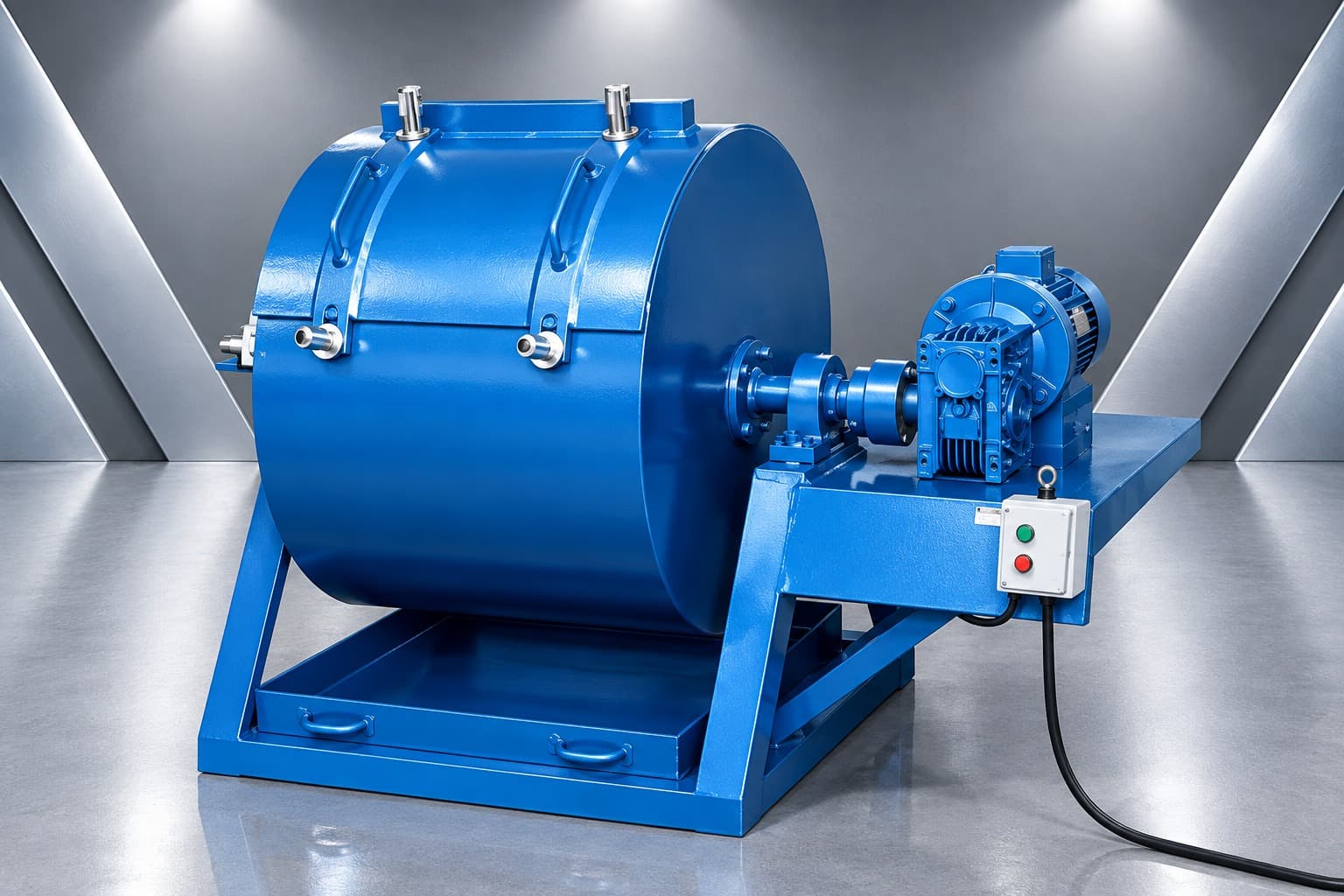
The Los Angeles Abrasion test is used to evaluate aggregate resistance to abrasion and impact under controlled laboratory conditions.
A Los Angeles Abrasion Testing Machine generally consists of a rotating steel drum with a controlled rotation mechanism and specified abrasive charge.
This equipment is particularly relevant for aggregates used in roads, pavements and other applications where resistance to wear is important.
Flakiness Index Apparatus
The Flakiness Index test evaluates the proportion of aggregate particles that have a thickness below a specified fraction of their mean size.
A Flakiness Index Apparatus typically includes a metal thickness gauge with specified slots.
Particle shape can influence packing, workability and mechanical behavior of aggregate-containing construction materials.
Elongation Index Apparatus
The Elongation Index test determines the proportion of particles whose length exceeds a specified relationship with their mean size.
An Elongation Index Apparatus uses a length gauge with appropriately dimensioned openings for particle assessment.
Flakiness and elongation testing are often considered together when aggregate particle shape is being evaluated.
Sieve Shaker and Test Sieves
Particle size distribution is one of the fundamental aggregate tests. A Sieve Shaker is used to mechanically agitate a stack of test sieves to separate particles according to size.
A typical aggregate gradation setup includes:
-
Test sieves
-
Sieve pan
-
Sieve cover
-
Sieve shaker
-
Weighing balance
-
Sample preparation equipment
The selected sieve sizes should correspond to the required gradation analysis and applicable standard.
Specific Gravity and Water Absorption Equipment
Specific gravity and water absorption tests provide information about aggregate density and the amount of water absorbed into aggregate pores.
Equipment may include:
-
Specific gravity bottles
-
Wire baskets
-
Weighing balances
-
Water tanks
-
Pycnometers
-
Drying equipment
The exact apparatus depends on the aggregate type and applicable testing method.
Bulk Density and Voids Equipment
Bulk density testing is used to determine the mass of aggregate occupying a defined volume under specified conditions.
Typical equipment includes:
-
Cylindrical density measures
-
Weighing balance
-
Straightedge
-
Sample containers
-
Calibration equipment
Bulk density data can be relevant to material proportioning, storage and mix-design calculations.
Aggregate Testing Equipment Manufacturer in Vasant Kunj
When selecting an Aggregate Testing Equipment Manufacturer in Vasant Kunj, buyers should evaluate the equipment based on technical construction, dimensional accuracy, operating mechanism and compatibility with the required test procedure.
Important considerations include:
-
Equipment dimensions
-
Material of construction
-
Test capacity
-
Mechanical strength
-
Measurement accuracy
-
Loading arrangement
-
Rotation speed where applicable
-
Drop height where applicable
-
Component tolerances
-
Surface finish
-
Standard compatibility
-
Accessories
For mechanical testing equipment, structural rigidity and consistent operating conditions are important because variation in the test mechanism can affect repeatability.
Aggregate Testing Equipment Supplier in Vasant Kunj
An Aggregate Testing Equipment Supplier in Vasant Kunj should be able to provide equipment according to the laboratory's testing requirements rather than offering only generic machines.
Before requesting a quotation, buyers should specify:
-
Aggregate type
-
Required test
-
Applicable standard
-
Required equipment capacity
-
Sample size
-
Quantity
-
Accessories
-
Manual or automated operation
-
Laboratory space
-
Documentation requirements
A test-wise procurement list makes it easier to identify all necessary apparatus and avoid missing accessories.
Aggregate Testing Equipment Exporter in Vasant Kunj
An Aggregate Testing Equipment Exporter in Vasant Kunj can supply aggregate laboratory equipment for international construction, road, infrastructure and testing projects.
Export enquiries may require additional product information such as:
-
Product specifications
-
Equipment dimensions
-
Net and gross weight
-
Packing details
-
Power requirements
-
Operating instructions
-
Test standards
-
Calibration or verification documents where applicable
-
Commercial documentation
-
Shipping information
International projects may specify ASTM, BS, EN, AASHTO or other testing standards. The applicable standard should therefore be confirmed before the final equipment specification is prepared.
Aggregate Testing Equipment Distributor in Vasant Kunj
An Aggregate Testing Equipment Distributor in Vasant Kunj can support laboratories that need multiple aggregate testing systems through one procurement channel.
A typical aggregate laboratory may require:
-
Aggregate Crushing Value Apparatus
-
Aggregate Impact Value Testing Machine
-
Los Angeles Abrasion Testing Machine
-
Flakiness Index Gauge
-
Elongation Index Gauge
-
Sieve Shaker
-
Test Sieves
-
Specific Gravity Apparatus
-
Water Absorption Equipment
-
Bulk Density Measures
-
Sample Dividers
-
Laboratory Balances
For larger procurement projects, buyers should compare technical specifications, accessories, documentation and service requirements in addition to price.
How to Select Aggregate Testing Equipment?
Choosing the right Aggregate Testing Equipment requires a clear understanding of the test program.
Identify the Aggregate Type
Determine whether the laboratory is testing coarse aggregate, fine aggregate, manufactured aggregate, recycled aggregate or another material.
Define the Test
Identify whether the objective is to evaluate crushing strength, impact resistance, abrasion, particle shape, grading, density or water absorption.
Confirm the Standard
The relevant IS, ASTM, BS, EN, AASHTO or project-specific standard should be established before purchasing equipment.
Check Sample Dimensions
Test sieves, gauges, moulds, cylinders and other apparatus must be compatible with the required sample size and test method.
Evaluate Mechanical Parameters
For equipment involving impact, rotation or loading, parameters such as drop height, rotational speed, loading capacity and operating mechanism should be checked.
Review Accessories
Many aggregate tests require additional sieves, balances, containers, gauges, trays and sample-preparation equipment.
Aggregate Testing for Concrete and Road Materials
Aggregates are major constituents of concrete and asphalt mixtures. Their size distribution, shape, strength and durability characteristics can influence the performance of the finished material.
For concrete laboratories, aggregate testing can support mix proportioning and material quality control.
For road laboratories, aggregate abrasion, impact resistance, particle shape and gradation can be important considerations depending on the pavement application and specified test requirements.
Therefore, the laboratory equipment should be selected around the complete material-testing workflow rather than one isolated test.
Applications of Aggregate Testing Equipment
Aggregate Testing Equipment in Vasant Kunj is used in a variety of construction and infrastructure environments, including:
-
Road construction
-
Highway projects
-
Bridge construction
-
Building construction
-
Concrete production
-
Ready-mix concrete plants
-
Precast concrete manufacturing
-
Asphalt and bituminous pavement projects
-
Quarry and aggregate processing
-
Construction material laboratories
-
Geotechnical laboratories
-
Civil engineering colleges
-
Research laboratories
-
Quality-control laboratories
-
Third-party testing facilities
The required equipment configuration depends on the materials and tests handled by each facility.
Aggregate Gradation Testing
Gradation testing determines the distribution of particle sizes within an aggregate sample.
A typical sieve-analysis workflow involves:
-
Preparing a representative aggregate sample.
-
Selecting the required test-sieve series.
-
Weighing the sample.
-
Placing the sample in the sieve stack.
-
Performing mechanical or manual sieving.
-
Recording the retained mass on each sieve.
-
Calculating percentage retained and passing.
-
Comparing the gradation with the specified limits.
A suitable Sieve Shaker can improve consistency and reduce manual handling during repetitive laboratory testing.
Quality and Testing Reliability
Reliable aggregate testing depends on the equipment, test procedure, sample preparation and measurement practices working together.
Laboratories should consider:
-
Equipment dimensional accuracy
-
Proper sample preparation
-
Correct test procedure
-
Suitable weighing equipment
-
Equipment maintenance
-
Periodic calibration or verification where applicable
-
Reference standards
-
Operator competence
-
Proper documentation
Mechanical equipment should also be inspected periodically for wear, loose components, damaged surfaces or changes in operating characteristics.
Aggregate Testing Standards
The applicable standard depends on the specific aggregate property being evaluated and the requirements of the project or laboratory.
Indian laboratories may use relevant BIS standards, while international projects may specify ASTM, BS, EN or AASHTO procedures.
Before procurement, the laboratory should identify the exact test method and corresponding standard. This helps ensure that the selected apparatus has the correct dimensions, operating parameters and accessories.
Complete Aggregate Testing Laboratory Setup
A laboratory requiring comprehensive aggregate testing may combine several categories of equipment.
| Testing Requirement | Common Equipment |
|---|---|
| Crushing Resistance | Aggregate Crushing Value Apparatus |
| Impact Resistance | Aggregate Impact Value Testing Machine |
| Abrasion Resistance | Los Angeles Abrasion Testing Machine |
| Particle Shape | Flakiness & Elongation Gauges |
| Gradation | Sieve Shaker & Test Sieves |
| Specific Gravity | Specific Gravity Apparatus |
| Water Absorption | Water Absorption Testing Setup |
| Bulk Density | Density Measures |
| Sample Preparation | Sample Divider & Trays |
| Measurement | Laboratory Balance |
The final equipment list should be customized according to the tests performed by the laboratory.
Why Application-Specific Aggregate Testing Equipment Matters
A laboratory performing routine sieve analysis does not have the same equipment requirements as a pavement-material testing laboratory.
Similarly, a concrete laboratory may need greater emphasis on aggregate gradation, specific gravity and water absorption, while a road laboratory may require additional abrasion, impact and particle-shape testing.
Therefore, Aggregate Testing Equipment should be selected according to:
-
Material type
-
Test method
-
Aggregate size
-
Required capacity
-
Applicable standard
-
Testing frequency
-
Measurement requirements
-
Laboratory workflow
-
Available space
-
Maintenance requirements
Get a Quote for Aggregate Testing Equipment in Vasant Kunj
Whether you are establishing a new civil engineering laboratory, expanding an existing facility or replacing individual aggregate testing apparatus, the equipment should be specified according to the required test methods.
For Aggregate Testing Equipment in Vasant Kunj, provide the required tests, aggregate type, sample size, applicable standards, quantities and equipment specifications when requesting a quotation.
A detailed requirement allows the supplier to prepare a more accurate equipment package and helps the laboratory procure compatible machines and accessories.
FAQs
What is Aggregate Testing Equipment used for?
It is used to evaluate aggregate properties such as particle size distribution, crushing resistance, impact resistance, abrasion resistance, particle shape, specific gravity, water absorption and bulk density.
Which machine is used for Aggregate Crushing Value testing?
An Aggregate Crushing Value Apparatus is used to conduct the specified crushing-value test on suitable aggregate samples.
What equipment is used for aggregate abrasion testing?
A Los Angeles Abrasion Testing Machine is commonly used for determining resistance to abrasion and impact under the applicable test procedure.
Which equipment is used for aggregate gradation?
A suitable set of laboratory test sieves and a Sieve Shaker are commonly used for particle-size or gradation analysis.
What should I consider before buying aggregate testing equipment?
Consider the aggregate type, test method, applicable standard, sample dimensions, equipment capacity, accuracy, accessories, laboratory space and testing frequency.
Can aggregate testing equipment be supplied as a complete laboratory setup?
Yes. A laboratory can combine equipment for crushing, impact, abrasion, gradation, particle shape, density and water absorption testing according to its testing scope.